Nordic Gamechangers: building impact where people, customers, and scale meet
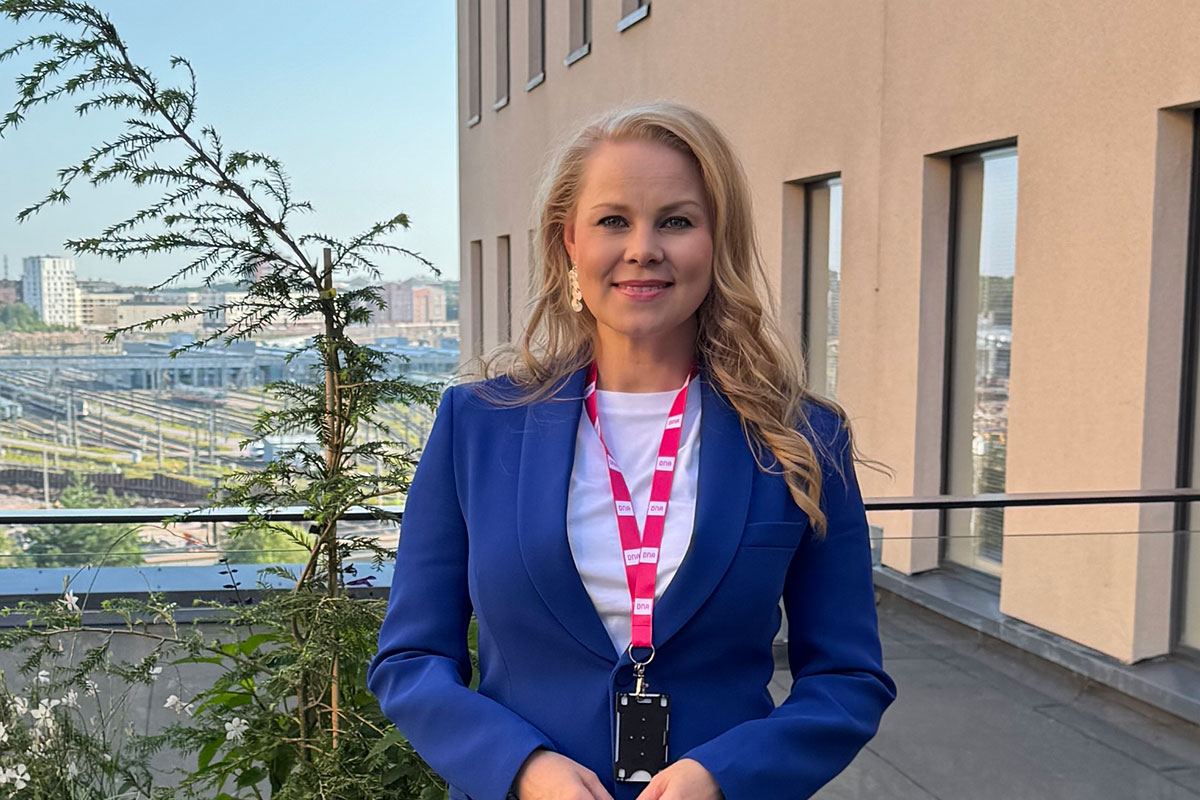
By the time Jaana-Liisa Malin turned 30, life already looked settled. She was an engineer, had a permanent engineering job, three young children, and a home she had built with her husband. From the outside, the big pieces were in place.
But she felt something else too.
“I had everything,” she says. “But I thought, I still have more to offer.”
This was the moment she decided to push it further. She pursued her master’s degree in industrial management and began actively chasing new opportunities, building on the engineering foundation she already had in place. It was a decision that helped shape what became a rich and varied journey through telecom, leadership, and customer-facing roles.
From engineer to customer advocate
As a child, Jaana-Liisa imagined a very different future for herself, one filled with piano and choir singing. But as she grew up, her strengths in mathematics pointed her in a different direction. She chose engineering and joined Ericsson already during her studies, where she would spend nearly two decades of her career.
Her early work was highly technical, focused on radio access networks. Over time, her role evolved. She moved into project management, sales, and leadership, gradually expanding her role from high technical customer work to broader business ownership and engagement with customer decision-makers.
“Ericsson is where I first learned to really understand the customer. How to listen, how to understand complex needs, and how to build trust,” she says, a perspective that has stayed with her ever since.
Learning the business from every angle
After nearly two decades in the technology side, Jaana-Liisa moved to the operator side, joining DNA in Finland. There, she led a large B2B organisation responsible for delivering services to corporate and wholesale customers.
It was a significant shift in responsibility and scale. Her team counted 240 people, spanning delivery, service management, and customer operations.
“You see the business differently when you are responsible for delivering to customers every day,” she says. “You understand what works, and where things break down.”
“I realised how important that connection is for me. I want to be close to where value is actually created.”
That realisation eventually led her back into telecom, and into Telenor’s Nordic organisation.
One Nordic team, four times the impact
Today, Jaana-Liisa works with some of Telenor’s most important cross-border priorities. Her focus areas include B2B growth and customer excellence across the Nordics. What makes the role different is the scale.
“It’s not about improving one business unit, rather it’s about creating impact across all of them.”
Instead of each country developing solutions independently, the Nordic model allows teams to test, refine, and scale what works.
“When we do something together, we avoid duplication. We move faster. And we make sure the best ideas are used everywhere.”
One example is the work to strengthen how Telenor serves pan-Nordic customers, companies that operate across multiple countries. By improving shared processes and ways of working, the business units can act more as one, delivering a more consistent experience.
Acting as a bridge across the Nordics
For Jaana-Liisa, the role of the Nordic organisation is clear.
“We are a bridge,” she says. “We connect people, ideas, and capabilities across countries.”
That means identifying shared challenges, bringing together the right people, and helping the business units move in the same direction without taking away local ownership.
“The countries know their markets best. Our role is to support them, not replace them.”
It’s a balance. Not everything should be centralised. But where it makes sense, working together creates clear advantages.
“You get scale. You get speed. And you get better results.”
What being a gamechanger means
After more than 20 years working close to customers, Jaana-Liisa is clear about what motivates her.
“I like to see the impact of what we do. To know that it makes things better for our customers,” she says.
For Jaana-Liisa, being a gamechanger is not about making noise or standing out for the sake of it. It is about making things work better. Connecting teams. Improving how things are done. And helping good ideas travel faster. Because when that happens, the impact is no longer local.
It becomes Nordic.